

BRISBANE PROPERTY INSIGHTS
What Buyers Notice First in a Changing Brisbane Property Market
Thoughtful property presentation and listing photography can help buyers understand a home’s proportions, functionality and potential.
Back to BlogsIntroduction
Imagine scrolling through five property listings.
Imagine scrolling through five property listings.
They have similar prices, comparable floor plans and are located in suburbs you're considering.
One has beautiful finishes, but the photographs make it difficult to understand the layout. Another is simpler, yet you can immediately see how the living room works, where the dining table fits and how the indoor spaces connect to the outdoors.
Which property would you be more interested in inspecting?
When selling a house in Brisbane, presentation isn't only about making a home look beautiful. It's also about helping buyers understand the space and recognise what makes it worth considering.
And with Brisbane's property market changing, that distinction is becoming particularly relevant.
THE MARKET IN CONTEXT
What is changing in Brisbane’s property market?
Cotality’s October 2026 Housing Chart Pack reports the following measures for Brisbane.
Source: Cotality, Monthly Housing Chart Pack — October 2026.
A SEPARATE MARKET MEASURE
PropTrack Home Price Index
Brisbane home prices declined 0.2% in September 2026, while remaining 4.1% higher year on year.
Source: PropTrack September 2026 Home Price Index, as summarised in the realestate.com.au September 2026 Home Price Report. Cotality and PropTrack use different methodologies.
These figures reflect different measures, but they point towards a market where buyers have more advertised properties to compare and homes are generally taking longer to sell.
Of course, conditions vary between suburbs, price points and property types.
What hasn't changed is the need to present a home in a way that makes its strengths easy to understand.
For agents and homeowners preparing a listing, that means looking beyond whether a room is tidy or attractive.
What will buyers understand about this home when they see it?
DESIGNING FOR CLARITY
Buyers need to understand how a room works
Think about an empty living room.
You can see the flooring, walls and windows, but it isn't always easy to judge where a sofa should go or how much furniture the room can comfortably accommodate.
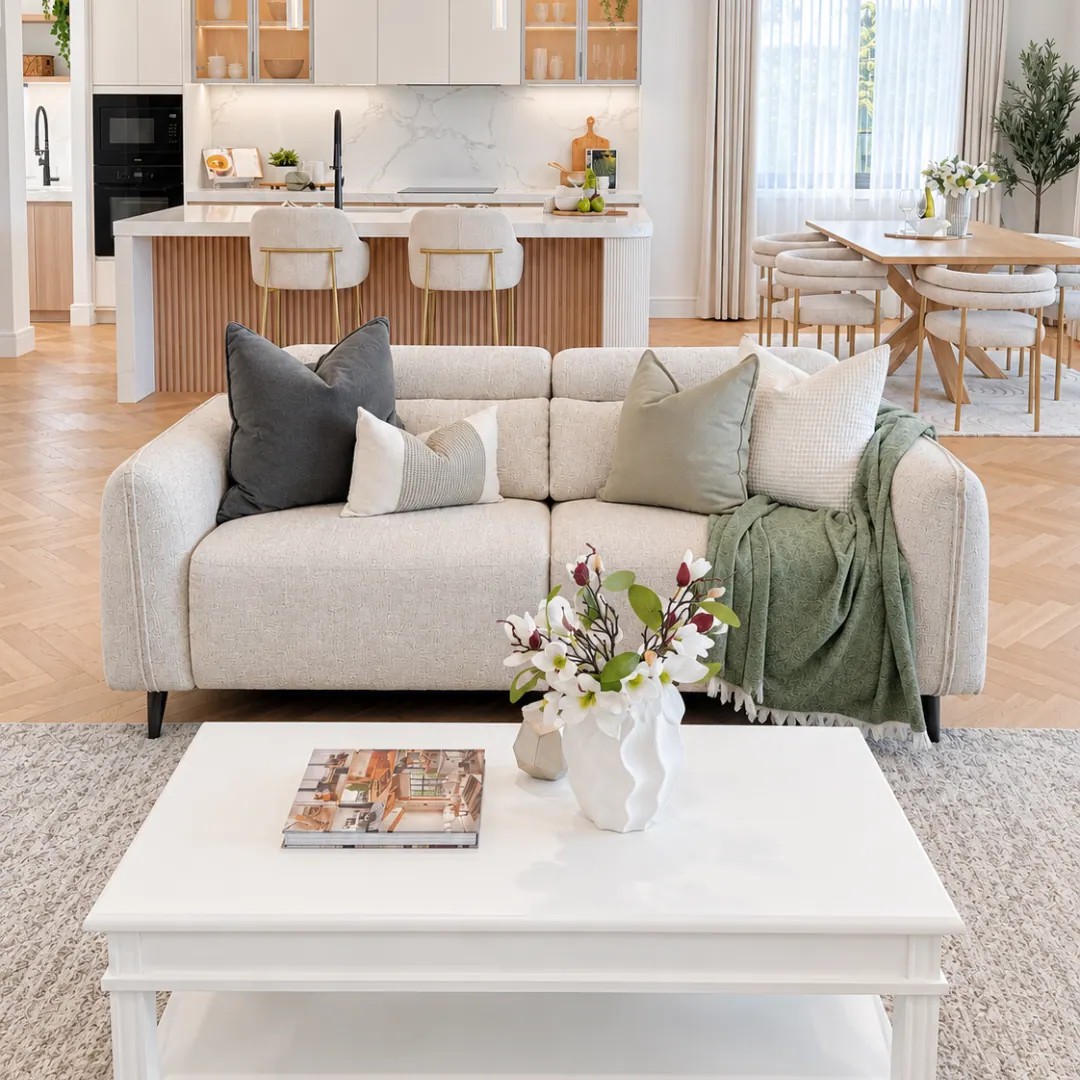
Now imagine the same space with appropriately sized furniture.
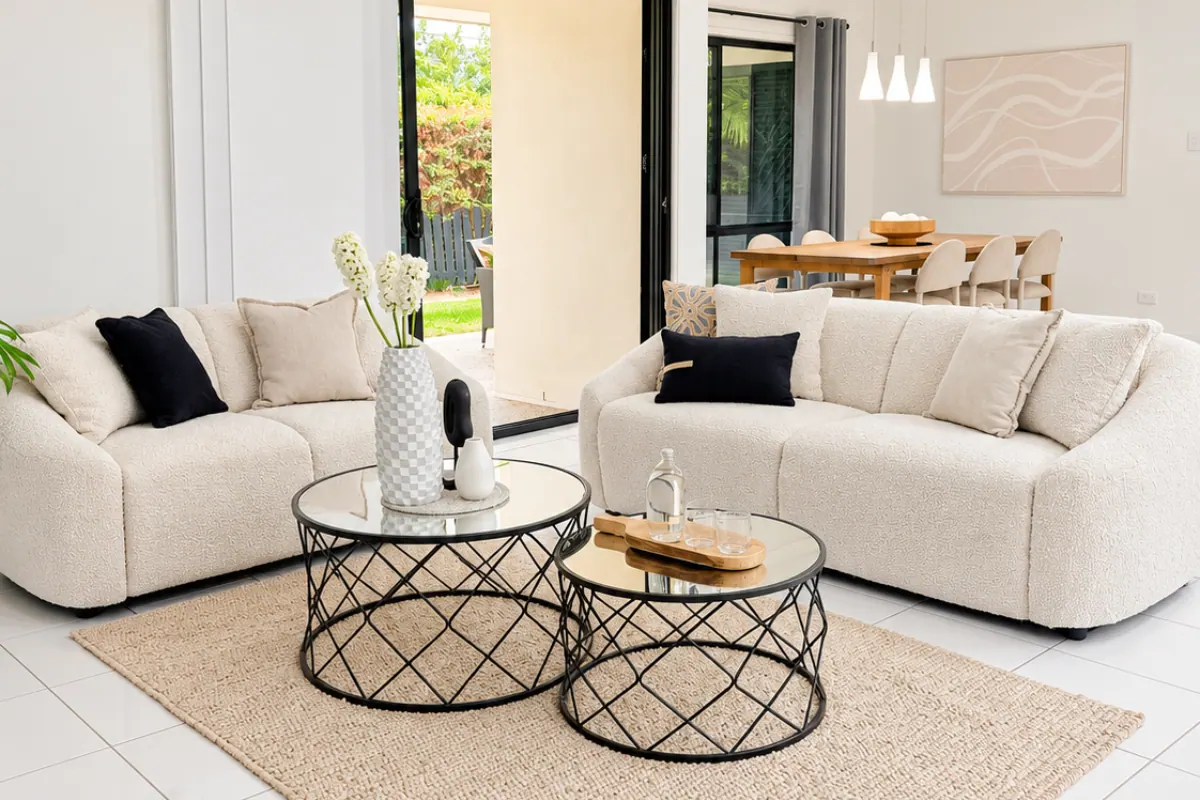
The sofa establishes scale. A rug defines the seating area. The arrangement shows how people can move through the room.
Suddenly, the layout makes more sense.
This is one of the practical benefits of thoughtful property styling.
It's not about filling every corner. It's about choosing furniture that helps explain the room.
A large modular sofa might work beautifully in a generous open-plan home. Place that same piece in a compact apartment, and it could overwhelm the space.
Likewise, furniture that's too small might fail to demonstrate what a substantial living room can accommodate.
The right proportions help buyers assess the property more realistically.
THE FIRST ONLINE IMPRESSION
What buyers see in listing photography
Before stepping through the front door, buyers will often have already looked through the property's online photographs.
Those images have an important job.
They need to communicate the layout, proportions and features of the home without the benefit of an in-person walkthrough.
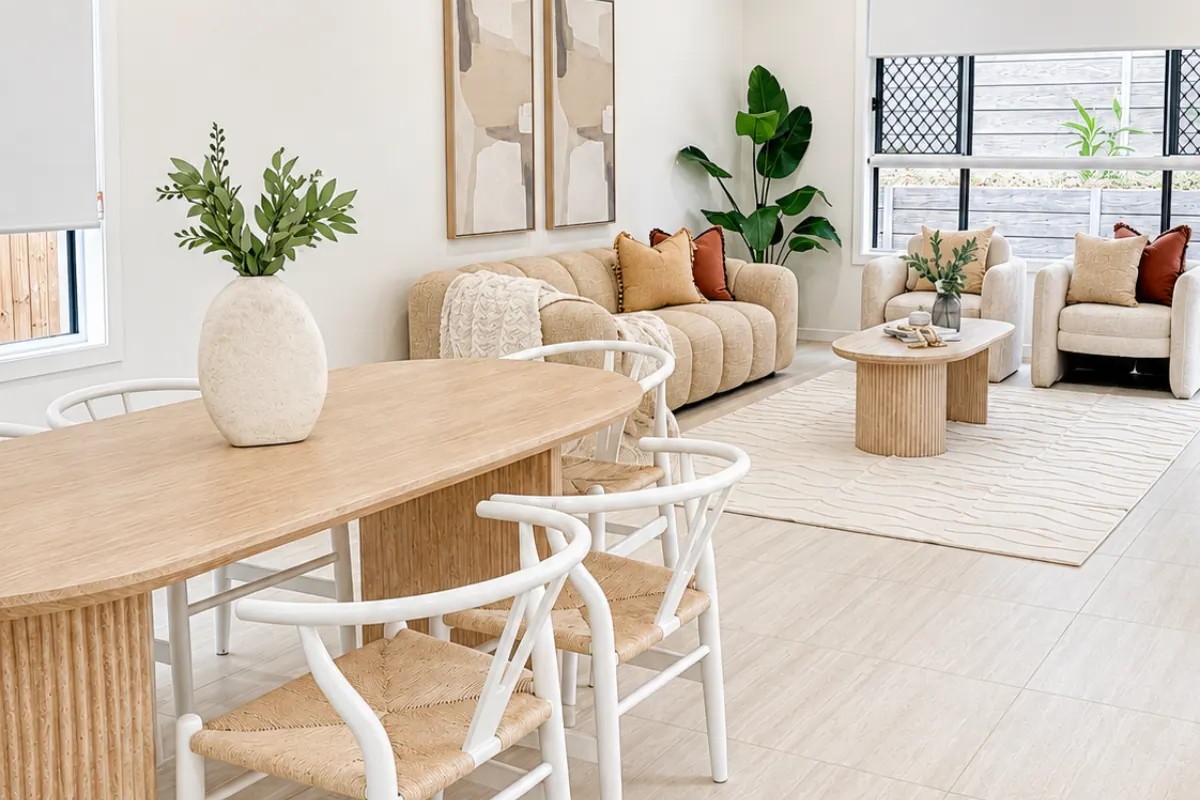
Consider an open-plan living and dining area.
If the furniture is poorly arranged, the photographs may struggle to show where one space ends and another begins.
But when the furniture defines each zone while maintaining clear walkways, the layout becomes easier to understand.
The same applies to bedrooms, outdoor entertaining areas and homes with unusual floor plans.
Good furniture placement and professional photography should complement one another.
Lighting, camera angles and composition matter, but so does what's happening inside the room.
And accuracy remains important. Buyers should arrive at an inspection and recognise the spaces they saw online, rather than discover that the photographs created misleading expectations.
Good photography should show the property at its best without misrepresenting what it offers.

AN APPROACH WITH RESTRAINT
A beautiful home still needs the right presentation
Here's something we often consider when approaching a property.
A home can already have beautiful architecture, quality finishes and plenty of natural light.
That doesn't automatically mean every furniture arrangement will suit it.
Imagine a contemporary home with large windows overlooking a landscaped garden.
Adding oversized furniture, heavy accessories and too many decorative pieces could compete with the very features that make the property appealing.
Sometimes a more restrained approach works better.
Now consider a home with generous rooms but relatively simple finishes.
That property may benefit from more defined furniture groupings to help demonstrate how the spaces could be used.
Neither home necessarily needs more furniture.
They need different decisions.
This is why property styling shouldn't follow the same formula from one property to the next.
The architecture, room proportions, existing finishes and likely buyer should all influence how a home is presented.
THREE HYPOTHETICAL SCENARIOS
Different homes call for different styling decisions
Not every home requires the same level of preparation.
Consider these three common situations.
A compact apartment
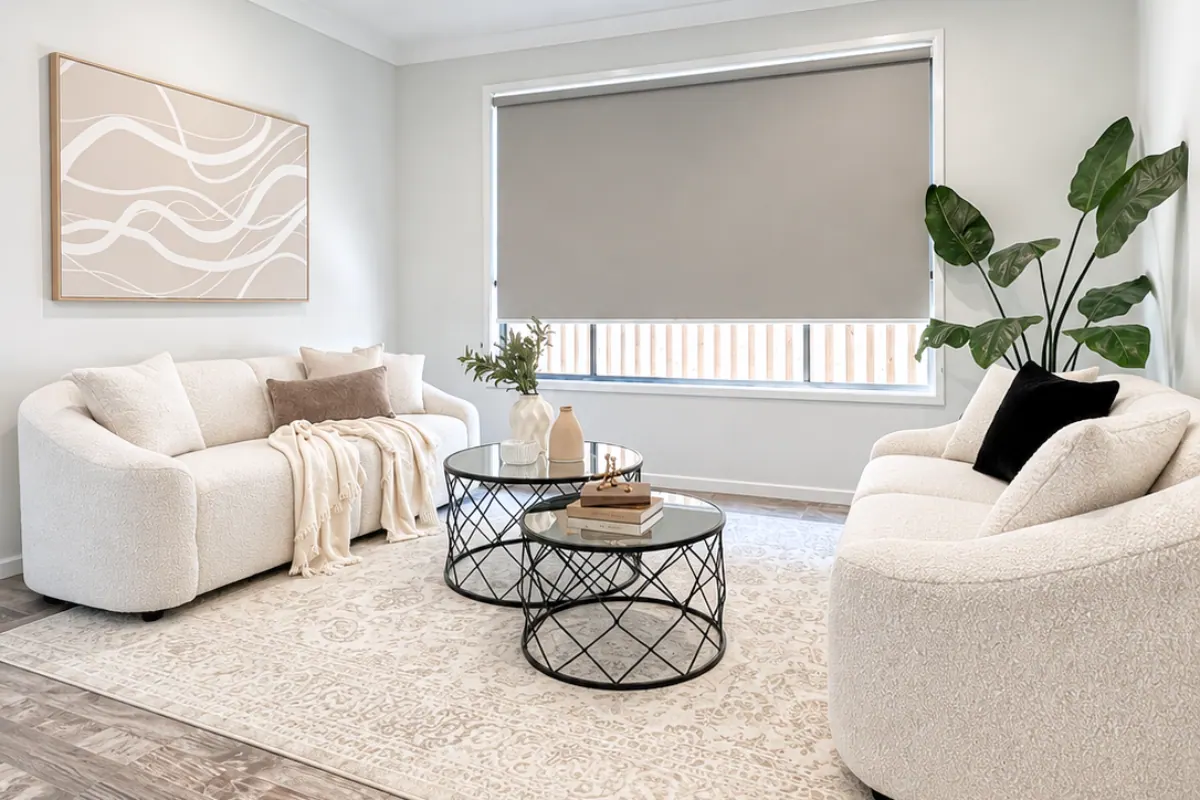
In a two-bedroom apartment, the main consideration might be demonstrating how the combined living and dining area functions without feeling overcrowded.
A compact sofa, smaller dining setting and clear walkways may be enough.
Adding unnecessary furniture could make the space harder to understand.
An occupied family home
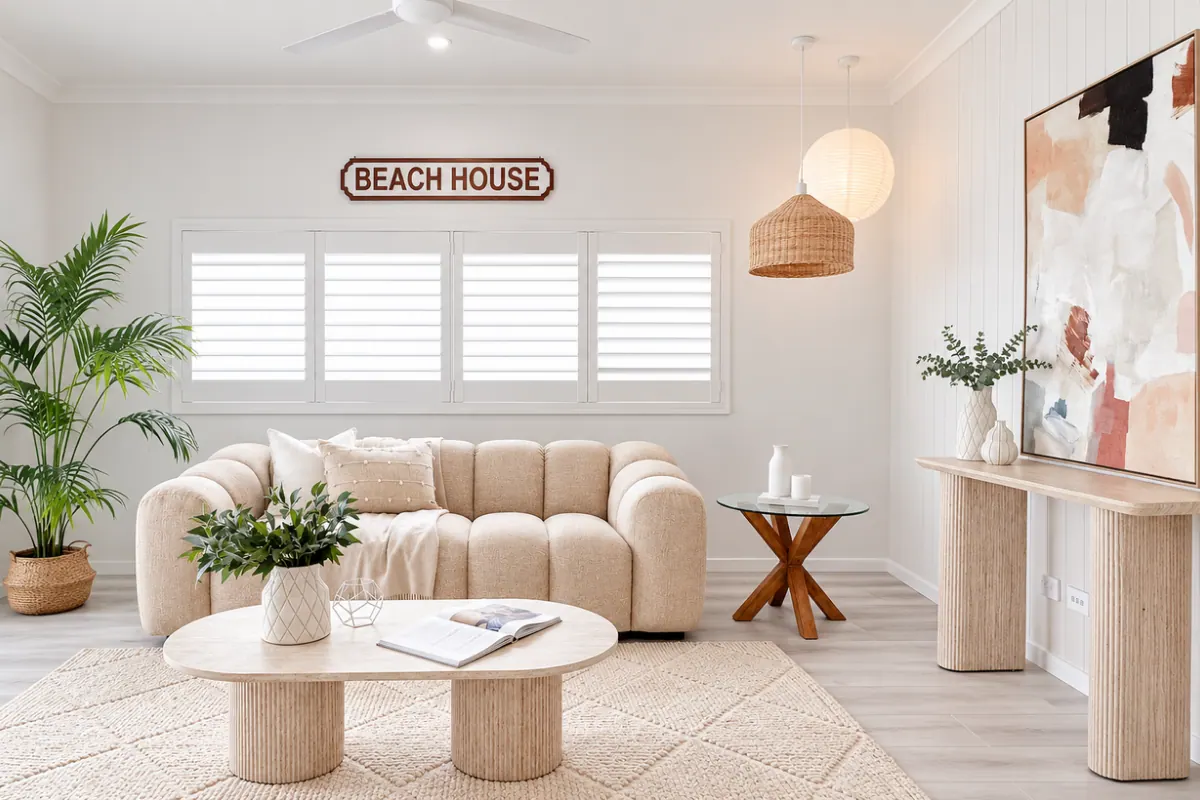
An occupied four-bedroom property may already have suitable furniture.
Rather than replacing everything, the best approach could involve repositioning a sofa, removing excess pieces or giving an underused room a clearer purpose.
This is where partial or occupied property styling can be useful.
A larger vacant property
In a spacious vacant home, buyers may find it difficult to distinguish between multiple living areas.
Furniture can help establish different functions, such as a family room, formal lounge or media space, provided those uses suit the layout.
These are hypothetical examples, but they illustrate an important point.
The property should determine the styling approach, not the other way around.
WHAT TO EXPECT
What property styling can and cannot do
Property styling can help communicate room proportions, demonstrate practical layouts and create a cohesive presentation throughout a home.
It can also support the photography process by making the spaces easier to interpret.
But it has limitations.
Styling cannot change a property's location, fix structural concerns or compensate indefinitely for an unrealistic asking price.
Nor can it guarantee more inspections, a faster sale or a particular selling price.
Those outcomes depend on several factors, including market demand, property condition, pricing and the agent's campaign strategy.
Sometimes comprehensive staging makes sense. Sometimes only selected rooms need attention.
And occasionally, rearranging existing furniture is all that's required.
The most appropriate decision is the one that supports the property and its selling campaign.
A PRE-MARKET CHECK
Five questions to consider before your property goes to market
Before confirming the styling and photography plans, agents and homeowners should consider:
FINAL THOUGHTS
The right presentation starts with understanding the property
Property styling can help communicate room proportions, demonstrate practical layouts and create a cohesive presentation throughout a home.
It can also support the photography process by making the spaces easier to interpret.
But it has limitations.
Styling cannot change a property's location, fix structural concerns or compensate indefinitely for an unrealistic asking price.
Nor can it guarantee more inspections, a faster sale or a particular selling price.
Those outcomes depend on several factors, including market demand, property condition, pricing and the agent's campaign strategy.
Sometimes comprehensive staging makes sense. Sometimes only selected rooms need attention.
And occasionally, rearranging existing furniture is all that's required.
The most appropriate decision is the one that supports the property and its selling campaign.